The short answer
Outdoors, fully acoustic ensembles surprisingly often work best: no power needed, no technical risk, provided a sheltered, shaded set-up. Amplified music is of course possible too, but needs more PA than indoors, a stable power supply and a check of local sound regulations.
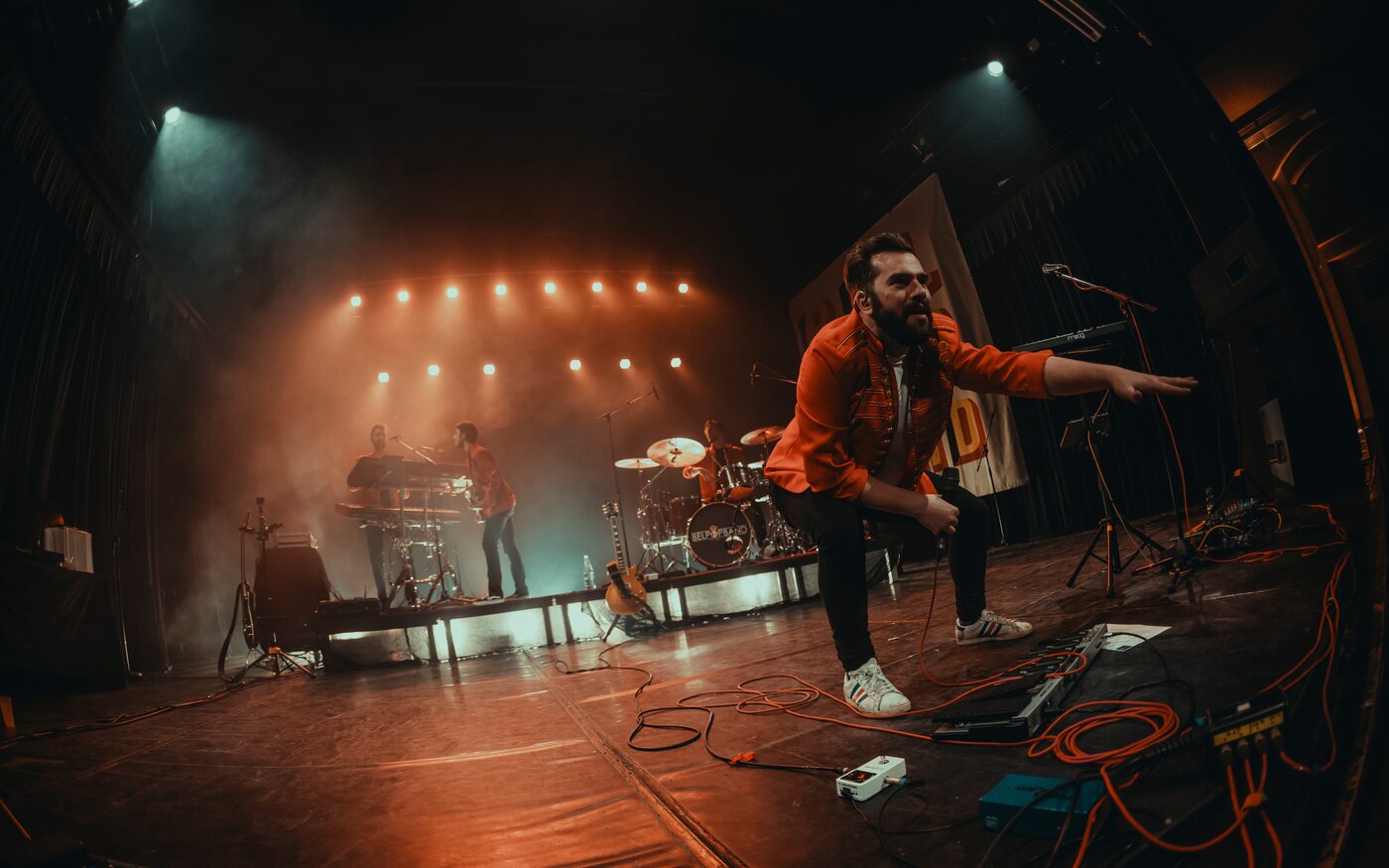
Why outdoors sounds different
Indoors, sound is carried by walls and ceiling: reflection gives the tone volume and warmth. Outdoors that reflection is absent — the sound fans out and disappears. The same ensemble that effortlessly fills a room of a hundred people suddenly sounds thin on an open lawn. That's not a quality problem but physics, and it shapes every choice that follows: the line-up, the set-up and any amplification.
Which ensembles work outdoors?
Fully acoustic: the most reliable choice
For receptions, ceremonies and garden parties up to roughly eighty guests, an acoustic ensemble outdoors is often the smartest option. Ensemble DRE (four musicians, fully unamplified, from €1,920 excl. VAT) needs no power and no technician — there's literally nothing that can fail. De Jartellen in their Unplugged format (45 minutes, unamplified) can even perform as a walking act: the ensemble moves among the guests, which works excellently outdoors. One important condition applies to all acoustic line-ups: a sheltered set-up.
String instruments: possible, with care
The Desguin Kwartet regularly plays outdoor ceremonies, but string instruments are sensitive to temperature swings, direct sunlight and moisture. The rules of thumb: a set-up in the shade and out of the wind, a hard or level surface, and a covered alternative within reach if rain threatens. Read more about the strengths and limits in a string quartet at your wedding.
Amplified ensembles and DJ: budget for more technique than indoors
A jazz trio, cover band or DJ can work perfectly well outdoors — but the PA that's enough indoors is often too light outside. Without reflecting walls, more power and a thoughtful placement of speakers are needed to achieve the same experience. Discuss the guest count and terrain shape in advance; which ensemble brings which amplification is set out in sound equipment: what's included.
The five practical points of attention
- Power. Amplified music needs a stable power supply at the playing spot. With a generator: discuss the wattage and distance to the stage in advance — voltage dips are fatal for equipment.
- Weather plan. Agree on a go/no-go moment and a covered alternative (tent, veranda, indoor space). A good agreement in advance prevents panic decisions on the day itself.
- Sound regulations and end times. Local sound regulations apply outdoors and often a permit requirement; the rules differ per municipality and per event type. Check this in good time with your municipality or venue — especially for amplified music after 10pm.
- Ground and shade. Musicians and instruments prefer a level, dry surface, out of direct sun. Grass after a rain shower is no friend to a cello spike or a DJ booth.
- Timing of the evening. Outdoors it cools down fast after sunset and dew settles on instruments and equipment. Plan the acoustic moments during the day or early evening, and the amplified after-party possibly under a tent or indoors.

"The most beautiful outdoor events I've guided had one thing in common: a plan B that was never used. It's precisely because the covered alternative was ready that everyone was relaxed — musicians included. Playing outdoors isn't a risk if you've organised the risk away in advance." Reinout Pauwels — music consultant at De Muziekvitrine
What does live music outdoors cost?
The fees are the same as indoors: an acoustic duo from €900, Ensemble DRE from €1,920, a quartet from €1,650 for a ceremony — all excl. 6% VAT. Where an outdoor surcharge can arise: extra PA power for amplified music, a generator if the terrain has no connection, and possibly a tent or covering for the playing spot. Factor those items into your budget; the full list of often-forgotten costs is in the hidden costs of live music.
For which event?
Outdoor music comes in many forms: an outdoor wedding ceremony, a garden party or anniversary, or a summer staff event — for the latter, you'll find the full playbook in our complete guide to corporate events. Playing times and set-up times per ensemble are in how long does an ensemble play.
The outdoor event checklist
Everything laid out for your planning: 1. choose the line-up based on guest count and terrain (acoustic up to ±80 guests, amplification above that); 2. determine the playing spot — shade, sheltered from wind, level dry surface; 3. coordinate power and PA with the ensemble; 4. check sound regulations and end time with the municipality or venue; 5. set the weather plan and go/no-go moment in the brief; 6. check the music rights — at outdoor events you almost always do the Unisono declaration yourself.