The short answer
A wedding ceremony has three musical moments: the processional, the vows and the recessional. A string quartet is the most chosen package (from €1,650 excl. VAT); a jazz duo (from €900) or a bespoke ensemble (€400 per musician) are full-fledged alternatives.
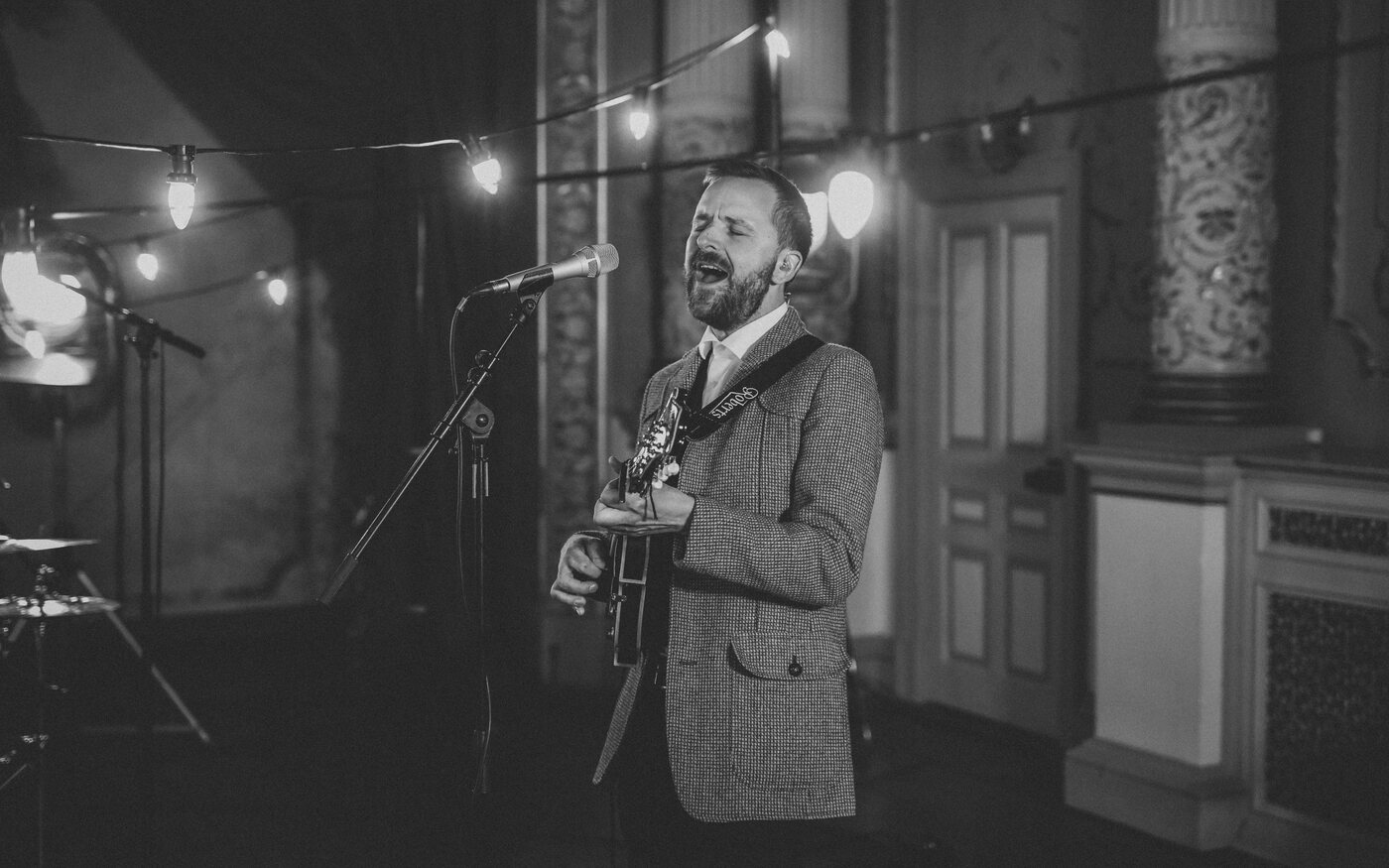
The three moments of a wedding ceremony
Musically, a wedding ceremony consists of three clearly defined moments, each with a different function and mood.
1. The processional
This is the moment you enter the church, hall or garden. The music announces your arrival — it's the signal for your guests to stand, look up and see you. The processional music should be stately enough to fill the space, but not so overwhelming that it overshadows your own emotions.
Classic choices proven to work: Pachelbel's Canon, Mendelssohn's wedding march, Bach's Air on the G String. Equally valid: a string quartet arrangement of a pop or film title that has meaning for you.
2. Vows and rings
During the exchange of vows, there's usually no music — silence is the most powerful instrument here. Some couples choose one short piece in between, or a song performed by a family member or friend.
If you want music at this moment, choose something intimate and understated. A solo violin or an acoustic duo plays more quietly here than at the processional — in the background, not centre stage.
3. The recessional
After the exchange you leave the room as a married couple. This is a moment of joy — the music may reflect that. A slightly more energetic piece is fitting here: upbeat, festive, but not exuberant. Vivaldi's Spring, a jazz standard, or even a lovely pop arrangement works excellently.
Which ensemble suits the ceremony?
String quartet — the most chosen package
The Desguin Kwartet is the most booked ensemble for wedding ceremonies in our line-up. The reasons are practical: fully acoustic (no PA, no technical risk), broad repertoire, refined sound in any acoustic space.
The ceremony package starts from €1,650 excl. VAT for the processional, vows and recessional. For a longer presence (e.g. also music for guest arrival), an extended package applies.
Jazz duo or acoustic duo
For an informal, modern wedding, Along Comes Mary as a duo offers a warm and elegant take on the ceremony. A jazz duo needs a PA for larger spaces but plays unmistakably atmospheric in smaller settings.
Bespoke ensemble (Vitrine Op Maat)
Want exactly the line-up that suits your venue and mood — a soprano with piano, a brass quartet, or a combination that appears in no catalogue? Via Vitrine Op Maat, we put together a fully bespoke ensemble at €400 per musician.
Timing: how much music do you need?
Most wedding ceremonies last 20 to 45 minutes. For a string quartet, this means:
- Guest arrival (15–30 min.): optional, depending on your wishes
- Processional (3–5 min.): one piece or two short pieces
- Vows/rings (5–10 min.): possibly one short piece
- Recessional (2–3 min.): one piece
In total, the ensemble plays actively for 10 to 25 minutes. The rest of the time they're present, ready to play. This is also included in the ceremony package.

"I always recommend discussing the processional music in a personal conversation — not through a form. The piece you choose for the moment you walk into the room, you'll remember for the rest of your life. That deserves more than a click in a dropdown." Reinout Pauwels — music consultant at De Muziekvitrine
Practical points to consider
- Room acoustics: a stone church has a long reverb; a modern hall is drier. Discuss this with the ensemble so they can adapt their playing.
- Outdoor vs. indoor: a string quartet prefers not to play in full sun or strong wind. Ensure a sheltered set-up.
- Cue to the ensemble: agree how the ensemble will know when to start. Eye contact, a nod, or a designated contact person.
- Microphone for the officiant: if there's amplification for the speaker, adjust the music volume so it isn't drowned out.